-A free morpheme is a morpheme (or word element) that can stand alone as a word. Students need to realize that certain words can stand alone without any help from a prefix or suffix.
Whole Language : a method of teaching reading and writing that emphasizes learning whole words and phrases by encountering them in meaningful contexts rather than by phonics exercises ( https://www.merriam-webster.com/dictionary/whole%20language ) Whole language is very important. "Whole language approach is an educational philosophy that teaches children to read by using strategies that show how language is a system of parts that work together to create meaning. While it may sound as if the whole language method discounts phonics as a way to teach reading, the use of phonemic awareness (or sub-lexical reading) is one of the components of the approach ( https://www.verywellfamily.com/what-is-whole-language-reading-620834 )" As it states this helps student with reading comprehension to create meanings.
Homophones -each of two or more words having the same pronunciation but different meanings, origins, or spelling, e.g., new and knew . https://www.google.com/search?q=homophone&source=lnms&sa=X&ved=0ahUKEwjTj_259J_fAhVoxoMKHQUgBJ4Q_AUICSgA&biw=1432&bih=719&dpr=1
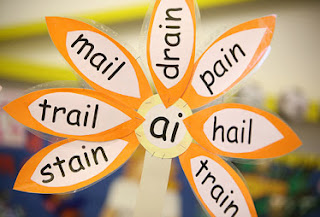
Analytic Phonics In analytic phonics children are taught to analyse whole words to detect spelling patterns and then split them into the onset and rime. This skill is important because, t his decoding enables them to make a comparison with other words they may know from the same word family. http://www.childrens-books-and-reading.com/analytic-phonics.html


Comments
Post a Comment